

Introduction
Cybersecurity has become one of the most essential skills in today’s digital era. Every day, billions of people use online banking, social media, cloud storage, mobile apps, and e-commerce—making cybersecurity threats more common than ever. Hackers are always looking for ways to steal data, break into accounts, spread malware, and misuse personal information.
This is why understanding cybersecurity basics is extremely important for students, employees, professionals, and anyone who uses the internet. One of the easiest and most effective ways to learn cybersecurity is through cybersecurity quiz questions. Quizzes make learning engaging, fun, and highly interactive. They help test your knowledge, strengthen your concepts, and prepare you for real-world cyber challenges.In today’s connected world, every click, login, and online interaction carries some level of risk. Cyber attackers no longer target only large companies—they now focus on individuals, small businesses, influencers, and even students who may not realize how vulnerable they are. Something as basic as a weak password or an unsafe link can expose your personal data within seconds. Because of this, cybersecurity awareness has become just as important as learning how to use a phone or computer.
This is where cybersecurity quiz questions become incredibly useful. They break down complex cybersecurity concepts into simple, understandable lessons. Instead of reading long technical guides, you can learn through quick questions that challenge your thinking and reveal how much you truly know. Whether it’s identifying phishing emails, understanding how malware spreads, recognizing fake websites, or learning the principles of data protection, quizzes help you absorb the right information faster.
Another major benefit of cybersecurity quizzes is that they help learners stay updated. Cyber threats evolve every day, and new attack methods appear constantly. By practicing quiz questions regularly, you stay informed about the latest techniques hackers use and the best ways to defend against them. This makes quizzes perfect for beginners as well as professionals who want to refresh their knowledge.
Why Are Cybersecurity Quiz Questions Important?
- Cybersecurity quizzes are useful for both beginners and advanced learners. Here’s why they matter:
Build Strong Cybersecurity Basics
- Quizzes help you understand topics like malware, phishing, password safety, network protection, encryption, and data security.
Learn Real-World Attack Scenarios
- Cyber attacks are happening every single day. Quiz questions prepare you for real-life situations by teaching you how attacks work and how to avoid them.
Improve Security Decision-Making
- Good cybersecurity depends on fast and correct decisions. Quizzes help you think logically and react smartly.
Boost Confidence for Certifications
- If you’re preparing for certifications like Security+, CEH, CISSP, or Cyber Awareness programs, quizzes are a must.
Fun and Easy Learning
- Instead of reading long theory, quizzes make learning interesting and interactive.
Types of Cybersecurity Quiz Questions
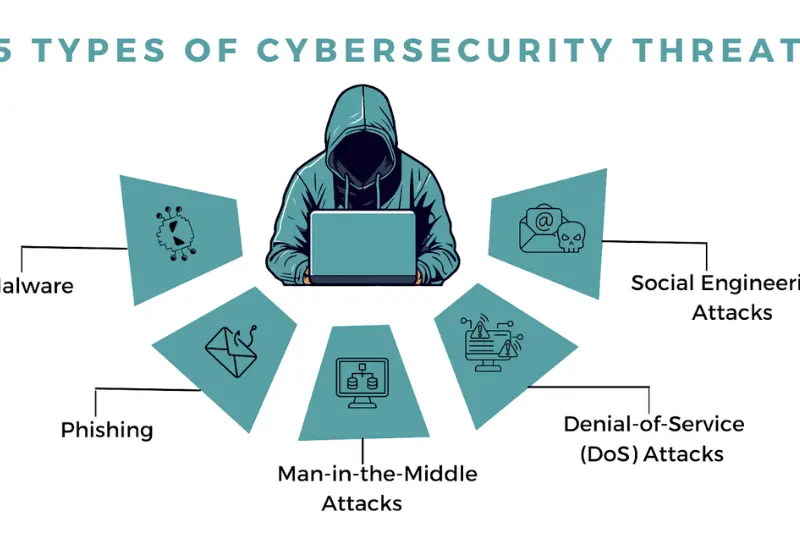
Cybersecurity quizzes usually cover multiple categories, including:
- Network Security
- Malware & Viruses
- Phishing & Social Engineering
- Password Security
- Cloud Security
- Data Protection
- Encryption
- Firewalls & Antivirus
- Cyber Laws
- Mobile Security
- Below is a complete list of quiz questions with answers.
Step-by-step Guide — “Cybersecurity Quiz Questions”
- Nice — let’s make this practical. Below is a clear, ordered guide you can use whether you’re an instructor building quizzes, a trainer running a workshop, or a learner trying to practice effectively. Follow the steps, copy the templates, and you’ll have high-quality cybersecurity quizzes ready in no time.
1) Define your goal and audience (Do this first)
- Decide the purpose: assessment, practice, revision, recruitment screening, or gamified learning.
- Identify the audience level: Beginner, Intermediate, Advanced, or mixed.
- Pick the scope: fundamentals (passwords, phishing), networks, malware, cloud, or certification prep (e.g., Security+, CEH).

2) Choose quiz format and delivery method
Options:
- Multiple choice (MCQ) — best for scale and auto-grading.
- True/False — quick checks.
- Short answer — tests recall and terminology.
- Scenario-based / Case study — evaluates application and decision-making.
- Practical tasks (labs) — for hands-on skills (use sandboxes or capture-the-flag).
4) Write high-quality questions (rules & examples)
Rules:
- Keep language simple and precise.
- Avoid ambiguous phrasing and double negatives.
- For MCQs, include 3–4 plausible distractors.
- Include a short explanation for the correct answer (for feedback).
- Vary scenarios to reduce memorization.
5) Set scoring, feedback and time limits
- Choose points per question (e.g., MCQ=1, Scenario=5).
- Decide pass thresholds (e.g., 70% for basic cert).
- Provide immediate feedback for practice quizzes (explanation, further reading).
- For formal tests, hide correct answers until grading is complete.
- Set reasonable time limits: allow reflection for scenario questions, shorter for T/F.
6) Randomize and secure the quiz
- Shuffle question order and options to reduce cheating.
- Use question pools to present random subsets.
- For high-stakes tests, enable browser lockdown or proctoring (if available).
- Track IP/logins and set one-attempt rules if needed.
7) Pilot test and review
- Run a small pilot with 5–10 participants or colleagues.
- Collect clarity issues, ambiguous answers, timing problems.
- Fix wording, update distractors, and verify correct answers and explanations.
8) Launch and monitor analytics
- After launch, track: average score, question difficulty index (percent correct), time per question, item discrimination (how well a question differentiates strong vs weak learners).
- Remove or revise questions that are too easy (near 100%) or too hard (near 0%) unless intentionally graded that way.
9) Provide remediation and learning paths
- For learners who fail or score low in topics, offer tailored resources: short readings, video tutorials, interactive labs.
- Create micro-quizzes targeted at weak topics (e.g., 5-question “Phishing Drill”).
10) Iterate and expand your bank
- Every cycle add new questions and retire stale ones (threats and best practices evolve).
- Tag questions by date created and last-reviewed for lifecycle management.
- Keep a rotating set of variant questions to prevent memorization.
FAQs
1. Who can benefit from cybersecurity quiz questions?
Anyone who uses the internet—students, beginners, employees, and IT professionals.
2. Can I learn cybersecurity through quizzes?
Yes, quizzes make learning easier and help strengthen concepts.
3. Are these quiz questions useful for exams?
Absolutely! They help in Security+, CEH, and many other certifications.
4. What topics should beginners focus on?
Phishing, passwords, network basics, malware, and encryption.
5. How often should I practice cybersecurity quizzes?
At least a few times a week to build strong knowledge.
Conclusion
Cybersecurity is not just a technical skill anymore—it is a life skill. In a world where cyber threats are constantly increasing, understanding cybersecurity basics is crucial. Practicing cybersecurity quiz questions is one of the best ways to learn, test, and improve your skills. These quizzes help you understand cyber attacks, common threats, protection methods, and best practices.
Whether you are a student, professional, business owner, or regular internet user, learning cybersecurity will protect you from online dangers. So keep practicing quizzes, keep learning, and most importantly—stay safe online!In today’s digital age, almost every aspect of life is connected to the internet. From online shopping and digital banking to social media and cloud storage, we rely heavily on technology—and with this convenience comes greater risk. Cybercriminals are constantly finding new ways to exploit systems, trick users, steal identities, and hack into data. This makes cybersecurity awareness not just optional, but absolutely essential for everyone.
Cybersecurity quiz questions play a major role in developing practical understanding. They simplify complex topics into easy learning steps. For example, you may not read a full article about phishing, but one quiz question can quickly teach you how fake emails work and what signs to watch out for. In the same way, questions about malware, brute-force attacks, firewalls, and encryption help you understand technical concepts in small, digestible pieces. This is why quizzes are such a powerful tool for learning.
Another advantage of cybersecurity quizzes is that they boost your confidence. Many people feel that cybersecurity is too technical or too complicated. But when you start answering quiz questions and get them right, you begin to feel more comfortable with the subject. Over time, your confidence grows and you start exploring more advanced topics. This steady learning process is important for anyone who wants to become digitally safe or build a career in cybersecurity.
For students, cybersecurity quizzes are an excellent way to prepare for exams and IT certifications. Professional programs like CompTIA Security+, CEH, CISSP, and cyber-awareness courses often include quizzes to test understanding. Practicing quiz questions daily helps you evaluate your readiness and identify weak areas. It becomes easier to revise, and you develop the ability to answer multiple-choice questions quickly and accurately—the same skill needed in real certification exams.
For professionals, these quizzes serve as a refresher. Cybersecurity changes fast, and staying updated is necessary. A quick quiz can remind you about new threats, updated protocols, and best practices. Even if you work in a different IT field, basic cybersecurity knowledge helps you become a more valuable and responsible employee.
