


Introduction
In today’s hyperconnected digital world, cybersecurity has become more critical than ever. As organizations face increasingly sophisticated attacks, data breaches, and emerging cyber threats, the need for strong security measures continues to rise. This rapid evolution in the cyber landscape has created a growing demand for innovative and impactful cybersecurity dissertation topics that address real-world challenges. From AI-driven defense systems to advanced network protection models, students and researchers are exploring some of the latest cybersecurity research topics to contribute meaningful solutions to the field. Analyzing, understanding, and developing new methods to combat cyber risks not only strengthens global security but also opens opportunities for groundbreaking academic research.
Why Cybersecurity Research Matters Today

Cybersecurity research plays a crucial role in protecting the digital infrastructure that society depends on daily. With cyber-attacks growing in frequency and complexity, organizations across all sectors—finance, healthcare, government, and education—are under constant threat. This makes it essential to explore new methods, technologies, and frameworks that can strengthen digital defenses and anticipate future risks.
Today’s cybersecurity landscape is influenced by several major factors: the rise of advanced malware, the expansion of cloud environments, and the increasing reliance on IoT and smart devices. Each of these areas introduces unique vulnerabilities that demand innovative research approaches. As a result, there is a significant push for students and scholars to investigate latest cybersecurity research topics, including AI-based detection systems, secure network architectures, encryption advancements, and digital forensics.
Moreover, human-related risks—such as social engineering, phishing, and insider threats—highlight the need for deeper study into behavioral security and awareness strategies. With cyber threats evolving faster than traditional security solutions, conducting impactful research is not just an academic requirement; it’s a necessity for building safer digital ecosystems. This urgency explains why interest in cybersecurity dissertation topics continues to grow, making the field one of the most vital areas for innovation today.
May be you like it:
Tech Pouch – The Ultimate Guide to Organizing and Protecting Your Gadgets
Tech 10s – Top Gadgets Apps and Emerging Tech Teens Must Know in 2025
Tech People – Roles Skills Careers And Future Trends in Technology
Tech Layoffs 2025 – Causes Trends and How to Navigate IT Job Cuts
Tech EU – Europe’s Leading Hub for Innovation AI FinTech And Green Technology
How to Choose the Best Cybersecurity Dissertation Topic
Choosing the right cybersecurity dissertation topic is a crucial step that shapes the direction and success of your research. Because the field is vast—covering everything from network security to AI-driven threat detection—it’s important to select a topic that is both meaningful and manageable. Start by identifying areas that genuinely interest you, whether it’s digital forensics, cloud security, cybercrime analysis, or machine learning in cybersecurity. Passion for your subject will keep you motivated throughout the research process.
Next, consider industry relevance. With organizations facing new forms of ransomware, phishing schemes, and emerging cyber threats, selecting a topic that aligns with current challenges ensures that your research contributes real value. Reviewing the latest cybersecurity research topics in academic journals, conferences, and industry reports can help you spot gaps that need further investigation.
Data availability is another key factor. Choose a topic for which you can access datasets, tools, or case studies—especially if your work involves hands-on analysis or experimentation. At the same time, ensure the scope is not too broad or too narrow; your topic should allow you to explore a clear problem while offering room for original insights.
Finally, think about long-term impact. A well-chosen topic can open doors to future career paths, whether in ethical hacking, security engineering, policy development, or academic research. By focusing on relevance, feasibility, and innovation, you’ll be well-positioned to select strong, impactful cybersecurity dissertation topics that stand out academically and professionally.
Top Cybersecurity Dissertation Topics (Comprehensive List)
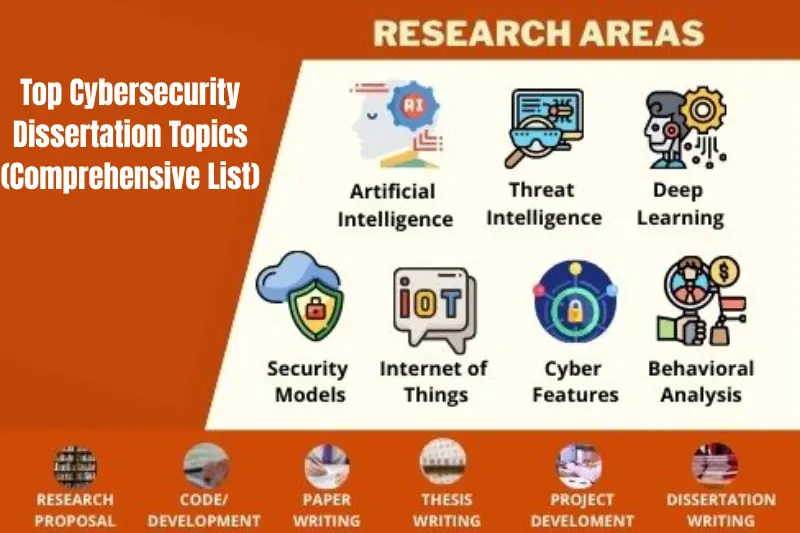
Below is a structured list of high-value cybersecurity dissertation topics, grouped into categories to help you choose a research direction that aligns with your interests and emerging industry needs. These clusters also allow you to naturally include related keywords like information security research topics, digital forensics topics, emerging cyber threats, and latest cybersecurity research topics throughout your dissertation.
Network & Infrastructure Security Topics
- Evaluating the efficiency of Zero Trust architectures in enterprise environments
- Advanced intrusion detection systems for modern networks
- Comparative analysis of firewall optimization techniques
- Securing critical infrastructure against nation-state cyber threats
- Vulnerability assessment frameworks for hybrid networks
Related keywords: network security dissertation topics, cyber-attack prevention
AI, Machine Learning & Automation in Cybersecurity
- Machine learning models for real-time threat detection
- Using AI to identify phishing patterns in large datasets
- Automated malware classification using deep learning
- Ethical implications of AI-powered cybersecurity tools
- Enhancing SOC operations with AI-driven automation
Related keywords: AI in cybersecurity, ML-based threat detection
Cloud Security Dissertation Topics
- Data privacy risks in multi-cloud storage platforms
- Evaluating access control mechanisms in cloud-native applications
- Threat modeling for serverless computing environments
- Secure API management in large-scale cloud systems
- Encryption techniques for cloud-based data protection
Related keywords: cloud security research topics, data protection in cloud systems
IoT & Smart Device Security
- Developing authentication protocols for IoT ecosystems
- Preventing IoT botnet attacks through behavioral analysis
- Smart home security vulnerabilities and mitigation strategies
- Role of edge computing in improving IoT security
- Security challenges in industrial IoT (IIoT) systems
Related keywords: IoT cyber threats, smart device security issues
Cybercrime, Privacy & Digital Forensics
- Investigating ransomware attack patterns using forensic tools
- Ensuring digital evidence integrity across cloud environments
- Privacy implications of large-scale biometric data collection
- Cybercrime trends in dark web marketplaces
- Frameworks for cross-border cybercrime investigation
Related keywords: digital forensics dissertation topics, privacy and cybersecurity
Blockchain & Cryptography Topics
- Blockchain-based identity verification systems
- Post-quantum cryptography readiness in modern organizations
- Blockchain applications in securing financial transactions
- Smart contract vulnerabilities and exploitation techniques
- Decentralized cybersecurity frameworks
Related keywords: blockchain security topics, cryptography research ideas
Human Factors in Cybersecurity
- The impact of employee behavior on organizational security
- Psychological analysis of social engineering attacks
- Effectiveness of cybersecurity awareness training programs
- Insider threat prediction models
- Assessing human error risks in critical infrastructures
Related keywords: cybersecurity awareness, social engineering research topics
May be you like it:
AI 2016 Flight Status – Real Time Updates And Air India Tracking
AI 2015 Flight Status – Live Updates Departure And Arrival Times
AI Jobs London – Top Careers Salaries And Opportunities in AI
AI Jobs Remote – Find the Best Work-From-Home AI Careers in 2025
AI Quotes – Inspiring Funny And Famous Artificial Intelligence Quotes
Latest Trends Influencing Cybersecurity Research
The cybersecurity landscape is evolving at an unprecedented pace, driven by technological advancements and increasingly complex cyber-attacks. These rapid shifts are shaping the direction of modern research and creating new opportunities for students exploring cybersecurity dissertation topics. Understanding current trends helps ensure that your research remains relevant, impactful, and aligned with the challenges organizations face today.
One of the biggest influences on the field is the integration of artificial intelligence and machine learning into security systems. AI-powered threat detection tools now analyze vast volumes of data to identify anomalies faster than traditional methods, making them a major focus of the latest cybersecurity research topics. As cybercriminals also adopt AI for more advanced attacks, studying automation, predictive analytics, and adversarial machine learning has become essential.
Another significant trend is the rise of Zero Trust security models, which challenge traditional perimeter-based defenses. With remote work, cloud platforms, and distributed devices becoming the norm, Zero Trust principles—“never trust, always verify”—play a crucial role in safeguarding networks. This shift opens doors to research on authentication systems, identity management, and micro-segmentation.
The growth of cloud computing and multi-cloud architectures also introduces complex issues related to data privacy, API security, and misconfiguration risks. Similarly, the expansion of IoT ecosystems has amplified vulnerabilities in smart devices, industrial systems, and connected homes, making IoT security one of the most critical areas of modern cybersecurity research.
Finally, emerging technologies such as quantum computing, blockchain, and autonomous security systems are shaping the future of the field. These advancements challenge traditional encryption methods and demand forward-looking research to prepare for new types of cyber threats.
Collectively, these trends highlight the need for continuous innovation and underscore why choosing timely and relevant cybersecurity dissertation topics is more important than ever.
May be you like it:
Cybersecurity Dissertation Topics – Latest Ideas And Research Areas for 2025
Cybersecurity Forensics – Complete Guide to Digital Investigation And Cybercrime Analysis
Cybersecurity Quotes – Top Inspirational, Expert And Funny Quotes About Cyber Safety
Cybersecurity Salary London 2025 – Cyber Security Jobs And Pay Insights
Cybersecurity Memes – Funny IT Humor And Hilarious Security Jokes
Tips for Writing a Strong Cybersecurity Dissertation
Writing a cybersecurity dissertation requires a strategic approach to ensure your work is both academically rigorous and aligned with real-world challenges. Whether you are exploring cybersecurity dissertation topics related to AI, digital forensics, cloud security, or emerging cyber threats, the following tips will help you produce a well-researched and impactful dissertation.
Start With a Clear Research Question
A strong dissertation begins with a focused research problem. Choose a topic that is specific, manageable, and grounded in current cybersecurity issues. Narrowing your topic—such as examining IoT vulnerabilities in healthcare or evaluating AI-driven intrusion detection—helps you generate deeper insights and avoids a broad, unfocused paper.
Review Existing Literature Thoroughly
Conducting a comprehensive literature review allows you to understand what has already been done and identify gaps your research can address. Explore academic journals, conference papers, cybersecurity frameworks, case studies, and the latest cybersecurity research topics to build context and support your arguments.
Select the Right Research Methodology
Depending on your topic, your methodology may involve quantitative data analysis, simulations, system development, penetration testing, case studies, or qualitative interviews. Choose the method that best supports your research goals and provides clear, measurable outcomes.
Use Reliable Tools and Technologies
Cybersecurity research often involves specialized tools such as Wireshark, Metasploit, Splunk, Python libraries for machine learning, or cloud platforms like AWS and Azure. Using industry-standard tools strengthens the credibility of your findings and prepares you for professional practice.
Ensure Ethical and Legal Compliance
Cybersecurity research may involve sensitive data, ethical hacking techniques, or privacy-related issues. Make sure you follow ethical guidelines, obtain necessary permissions, and avoid unauthorized system access. Addressing ethics strengthens the legitimacy of your dissertation.
Present Data Clearly and Objectively
Whether you are analyzing network traffic or evaluating machine learning models, your data should be presented clearly using graphs, tables, and visualizations. Explain your results logically and avoid bias—let the data support your conclusions.
Conclude With Practical Implications
A strong cybersecurity dissertation highlights how your findings can be applied in the real world. Discuss the implications for organizations, policymakers, or future researchers, and suggest how your work can help address ongoing or emerging cyber threats.
Conclusion
As cyber threats continue to evolve, the need for innovative and well-researched cybersecurity dissertation topics has never been greater. Whether your interests lie in AI-driven defense systems, network security, digital forensics, cloud protection, or emerging technologies like blockchain and quantum computing, the field offers countless opportunities for impactful academic exploration. By choosing a topic that aligns with industry challenges and the latest cybersecurity research topics, you not only strengthen your dissertation but also contribute to the ongoing development of safer digital environments.
Cybersecurity research is more than an academic exercise—it is an essential part of defending today’s interconnected world. With thoughtful planning, rigorous methodology, and a commitment to innovation, your dissertation can play a meaningful role in addressing the complex security issues of the future.
May be you like it:
Gadget Show Host – Complete Guide to The Gadget Show Presenters
Gadget Synonym – Best Alternatives Examples And Usage Guide
Gadget Dagenham – Top Tech Stores Latest Gadgets And Local Deals
Gadget Show Cast – Meet The Famous Gadget Show Presenters And Hosts
